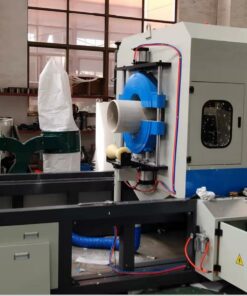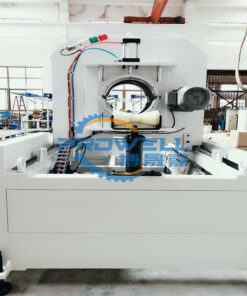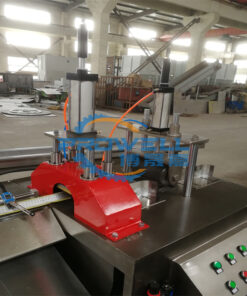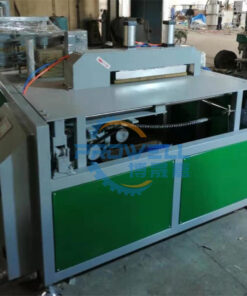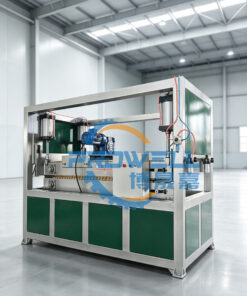
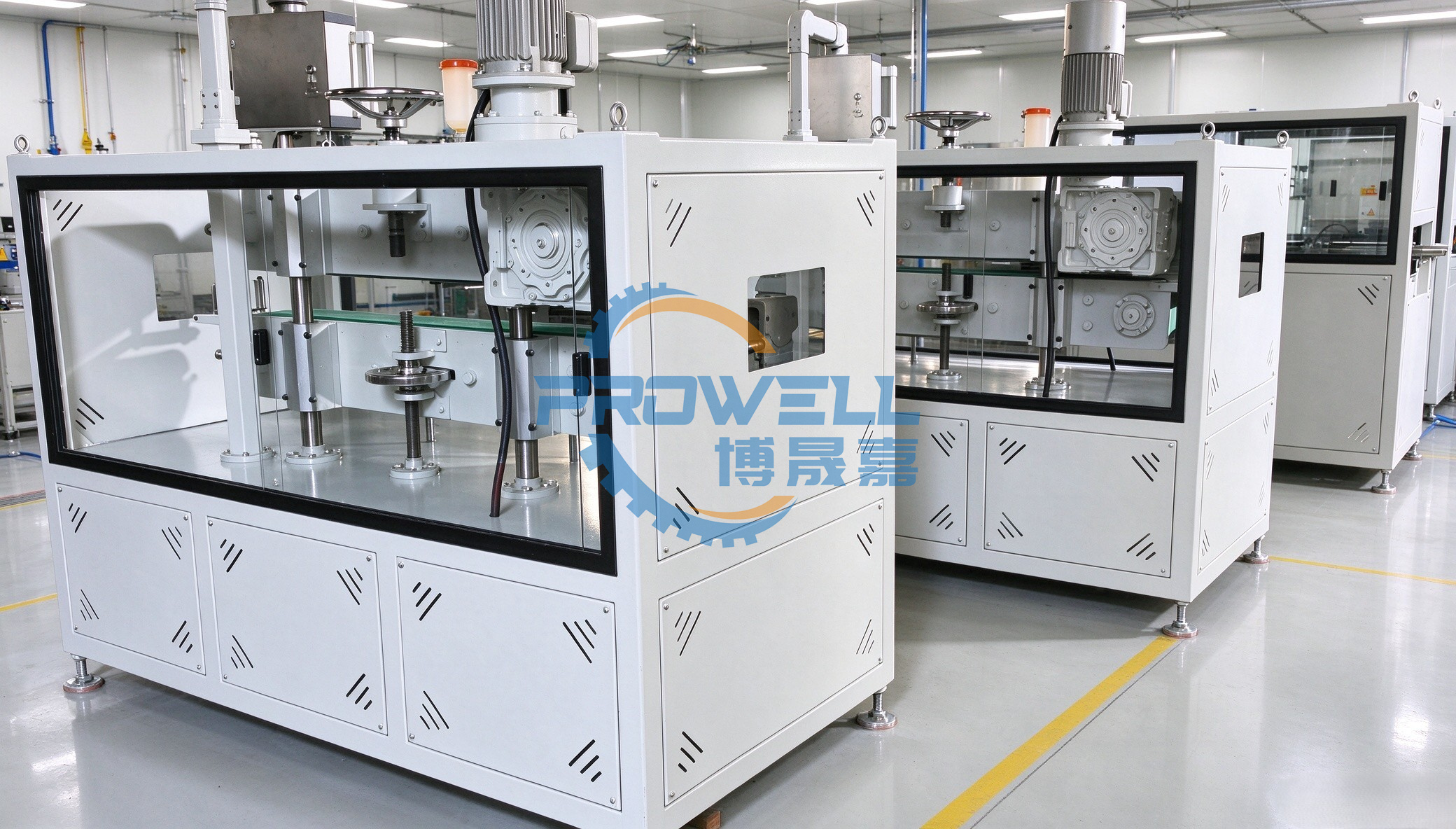
Plastic Profile Haul-off Pulling Machine
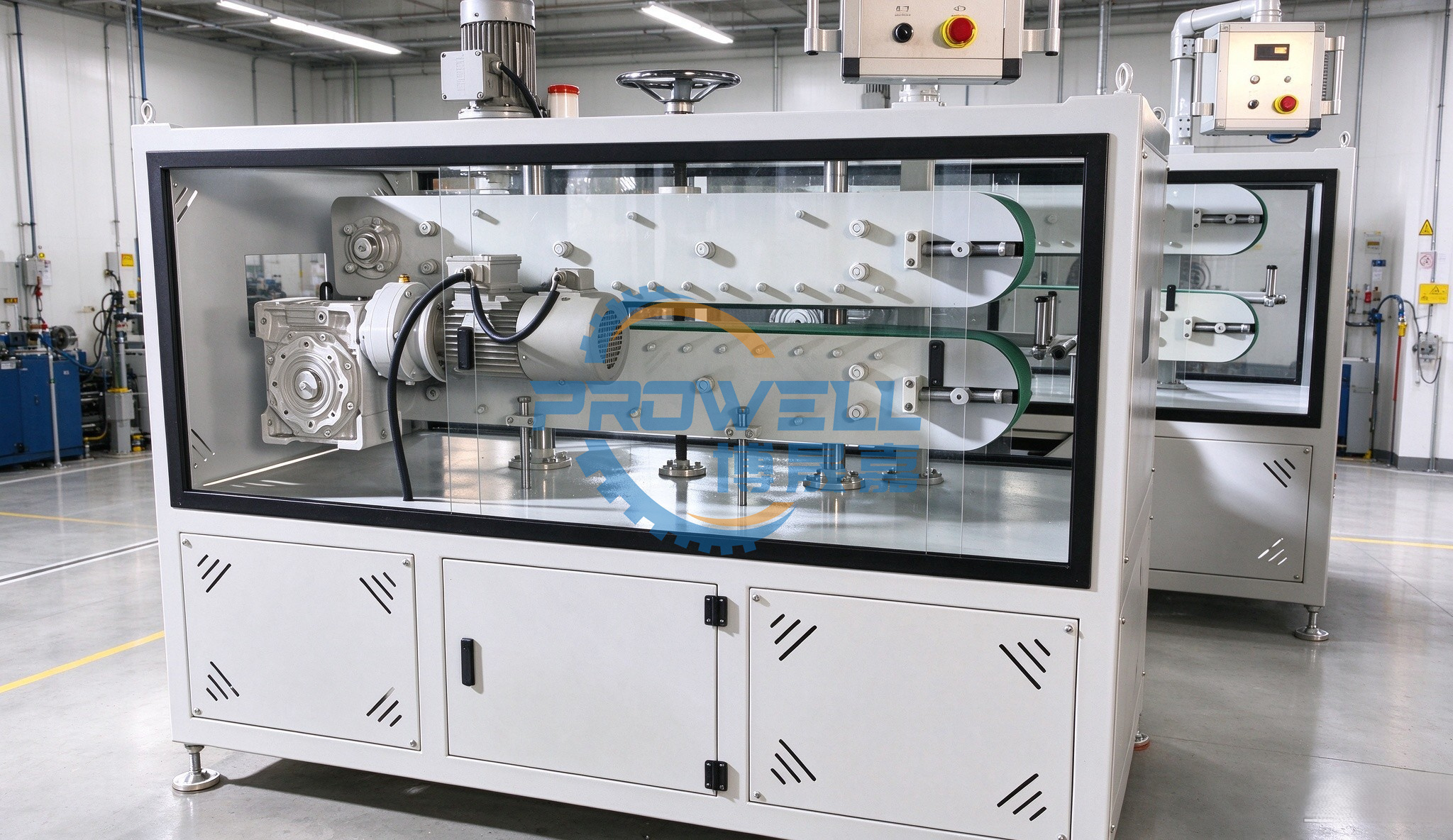
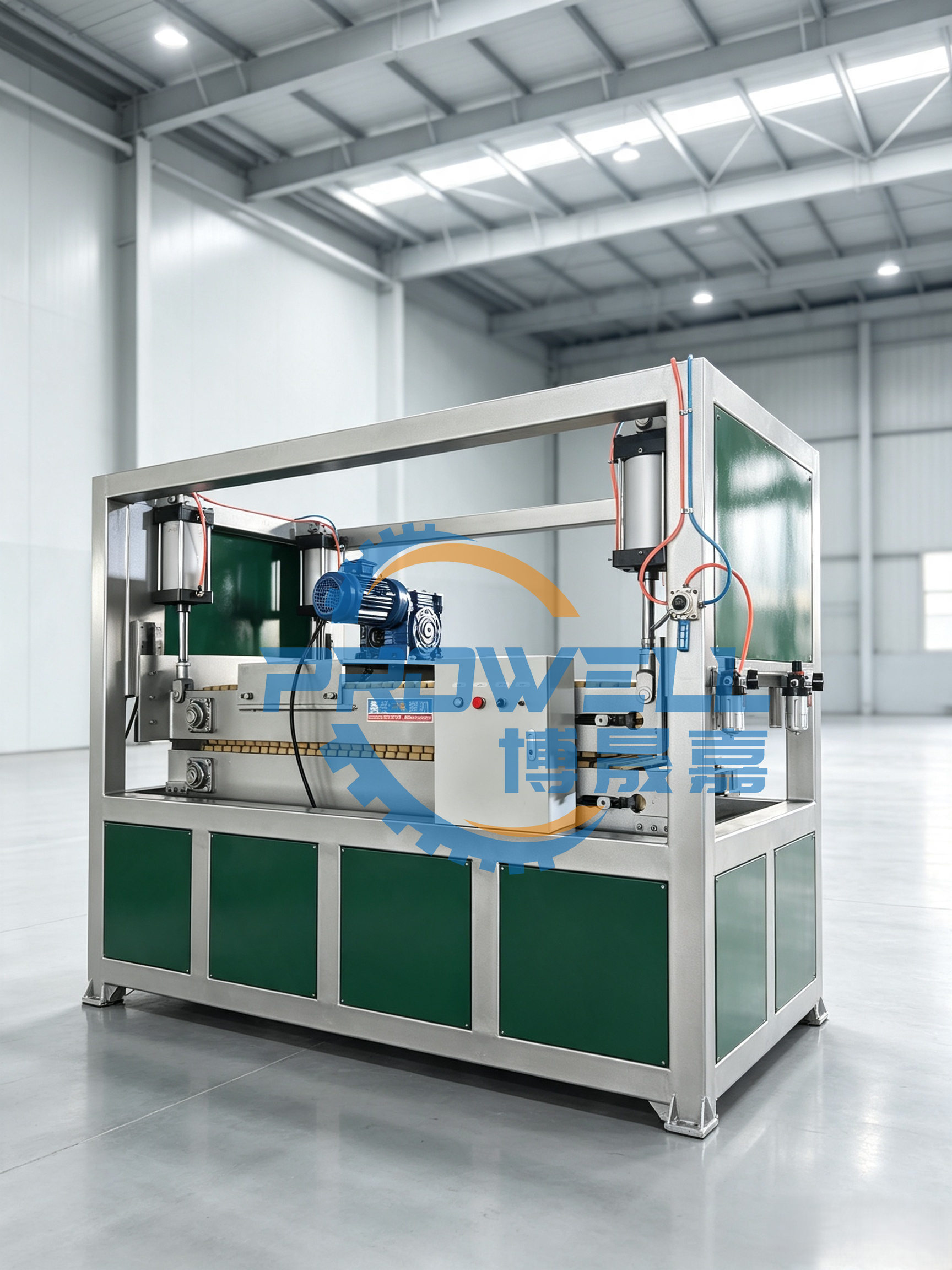
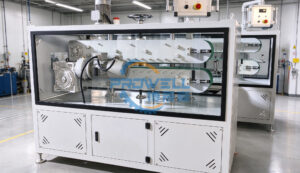
On a plastic extrusion line, the product must be continuously pulled out at a stable speed after being shaped by the die; this process is known as haul-off (or traction). The Plastic Profile Haul-off Pulling Machine utilizes wear-resistant multi-ribbed belts as the traction medium. Driven by an Innomotics motor and equipped with a Yaskawa (Japan) variable frequency drive for stepless speed regulation, it ensures uniform clamping without slippage or surface damage. It is widely used for hauling off plastic products such as pipes, profiles, sealing strips, wires and cables, and medical catheters.
I. Working Principle of the Plastic Belt Haul-Off Machine
The plastic belt haul-off machine clamps the plastic product between upper and lower (or multiple) multi-ribbed belts.
The motor, via a reduction gear, drives the belts to run at a constant speed, pulling the continuously extruded product out at the set rate and providing a stable linear speed for subsequent cutting and winding processes.
Matching the haul-off speed is critical to product quality:
– Haul-off speed too fast → Product wall thickness decreases, outer diameter becomes undersized, and the product may snap under tension.
– Haul-off speed too slow → Wall thickness increases, outer diameter becomes oversized, and material accumulation/deformation is likely.
– Speed fluctuations → Dimensions vary inconsistently, leading to inaccurate fixed-length cutting.
Therefore, the speed regulation precision and stability of the haul-off machine are key factors determining the yield rate of the entire extrusion line. II. Three Core Configurations
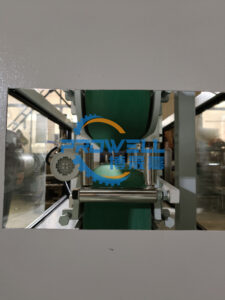
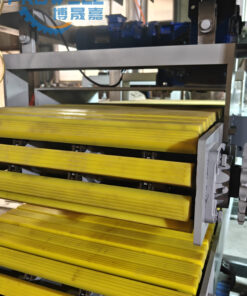
1. Wear-resistant multi-ribbed belt: Large contact area, no slippage, and no pressure marks.
The belt features multiple longitudinal wedge-shaped grooves distributed across its surface, combining the flexibility of a flat belt with the high friction of a grooved design.
– Large gripping area and low pressure: Force is evenly distributed across the product surface, preventing damage or scratches to thin-walled pipes and soft products.
– High friction: The large engagement area of the wedge grooves ensures slip-free traction and stable gripping for both cold and hot products.
– Long service life: The wear-resistant compound is designed for continuous production; replacement is easy and cost-effective.
– Smooth, quiet operation: The flexible belt conforms well, resulting in minimal vibration.
2. Inmunda motor: Stable power output.
Haul-off motors require sufficient torque at low speeds,low temperature rise during prolonged operation, and quiet performance. Inmunda motors offer smooth operation and rapid start/stop response; combined with a reduction mechanism, they deliver stable torque even during low-speed hauling, ensuring a uniform linear haul-off speed.
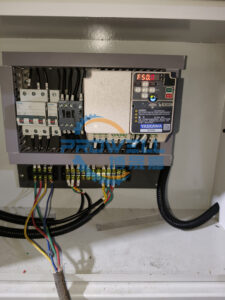
3. Yaskawa (Japan) variable frequency drive (VFD): Precise stepless speed control and synchronization with the extruder.
Yaskawa is a renowned Japanese VFD brand, distinguished by its speed control precision and long-term stability. Its functions in the haul-off unit include:
– Stepless speed control: Haul-off speed can be continuously fine-tuned to meet process requirements and accommodate the processing windows of various product specifications;
– Soft start: Gradual acceleration prevents product deformation or breakage caused by sudden pulling at startup;
– Synchronization control: Links with the main extruder speed (via analog signal or communication) to maintain dynamic matching between hauling and extrusion—the key to stable product dimensions;
– Comprehensive protection: Includes safeguards against overload, overvoltage, and phase loss, reducing the electrical failure rate.
The combined effect of these three core configurations can be summarized in one phrase: stable gripping, uniform hauling, and precise speed control.
Key Points for Operation and Maintenance
1. Before startup: Check belt tension and wear; clear any material debris or foreign objects from the clamping area.
2. During production: Adjust clamping force from low to high, stopping at the point where “no slippage” occurs to avoid excessive pressure; simultaneously monitor haul-off speed and extruder current, making fine adjustments if synchronization issues arise.
3. Periodic maintenance: Clean dust and debris from the belt’s wedge grooves (to prevent slippage); check bearing lubrication and belt tracking; keep the variable frequency drive (VFD) clean and well-ventilated for heat dissipation.
4. Synchronization setup: When starting a new product specification, synchronize at low speed first, then gradually ramp up to the target production speed.
Frequently Asked Questions (FAQ)
Q1: Will the belt haul-off leave marks on the product surface?
Multi-ribbed belts offer a large contact area and low unit pressure; with proper clamping force adjustment, they do not leave marks—this is a key advantage over roller-type haul-offs. For products with highly sensitive surfaces, softer belt face materials can be selected.
Q2: What causes the haul-off speed to fluctuate?
Common causes include: belt slippage due to insufficient tension, interference with the synchronization signal, VFD parameters not optimized for low-speed operation, or excessive backlash in the reduction mechanism. It is recommended to first check for belt slippage and synchronization signal issues.
Q3: How often should the multi-ribbed belt be replaced?
It depends on production intensity and product material. Replace the belt if significant flattening, cracking, chunking, or frequent slippage occurs. Keeping the wedge grooves clean during daily operation can significantly extend service life.
Q4: Can it haul off round, flat, or soft products?
Yes. Round pipes are naturally enveloped by the upper and lower belts; flat profiles are clamped between flat surfaces; for very soft products, it is recommended to reduce clamping force and verify the required traction force; custom belt profiles are available for irregular cross-sections.
Q5: How do I synchronize the haul-off unit with my extruder?
The Yaskawa variable frequency drive (VFD) supports both analog and communication-based speed reference methods; it can be interlocked with the extruder’s control signals to achieve line speed synchronization, with specific wiring determined by the on-site control scheme.
Conclusion
The value of the plastic belt haul-off unit lies in its ability to “clamp securely, pull evenly, and adjust precisely”: wear-resistant multi-ribbed belts protect the product surface and prevent slippage; a Innomotics motor delivers smooth, steady power; and the Japanese Yaskawa VFD ensures speed regulation accuracy and synchronization with the extruder.
If you require model selection or customization based on your product specifications (width, wall thickness, haul-off speed range), please feel free to provide samples and process parameters for further discussion.